
Homestead Resident Lookup Sources
Homestead is one city within Miami-Dade County, so the useful name trail crosses several custodians. The city keeps municipal files. Miami-Dade holds the property roll, recorded instruments, election data, and Eleventh Judicial Circuit records. Florida agencies keep vital certificates, corporations, licenses, and corrections data. Each source records a specific role on a specific date.
| Record | What It Confirms | Where | Access |
|---|---|---|---|
| Property roll | Owner, situs, mailing address, folio, sales | Property Appraiser | Free name, address, folio, or subdivision search |
| Recorded documents | Deed party, lien, mortgage, filing date | County Clerk | Most from 1974 forward online; older material at Records Library |
| Civil and probate | Party role, case number, type, docket | Clerk OCS | Public index, with protected files withheld |
| Voter information | Authenticated status and precinct | Florida lookup or Elections request | Self-check and separate redacted data route |
| Vital records | Birth, death, marriage, dissolution facts | Florida and Miami-Dade DOH | Eligibility varies |
| Business and license | Filed role or credential | Sunbiz, DBPR, MQA | Free official search |
Choose the record closest to the question. An owner name belongs in Property Search. A decedent or heir may appear in probate. A business officer belongs in Sunbiz. A role in one index is not a full profile or proof of present occupancy.
Homestead Court Name Searches
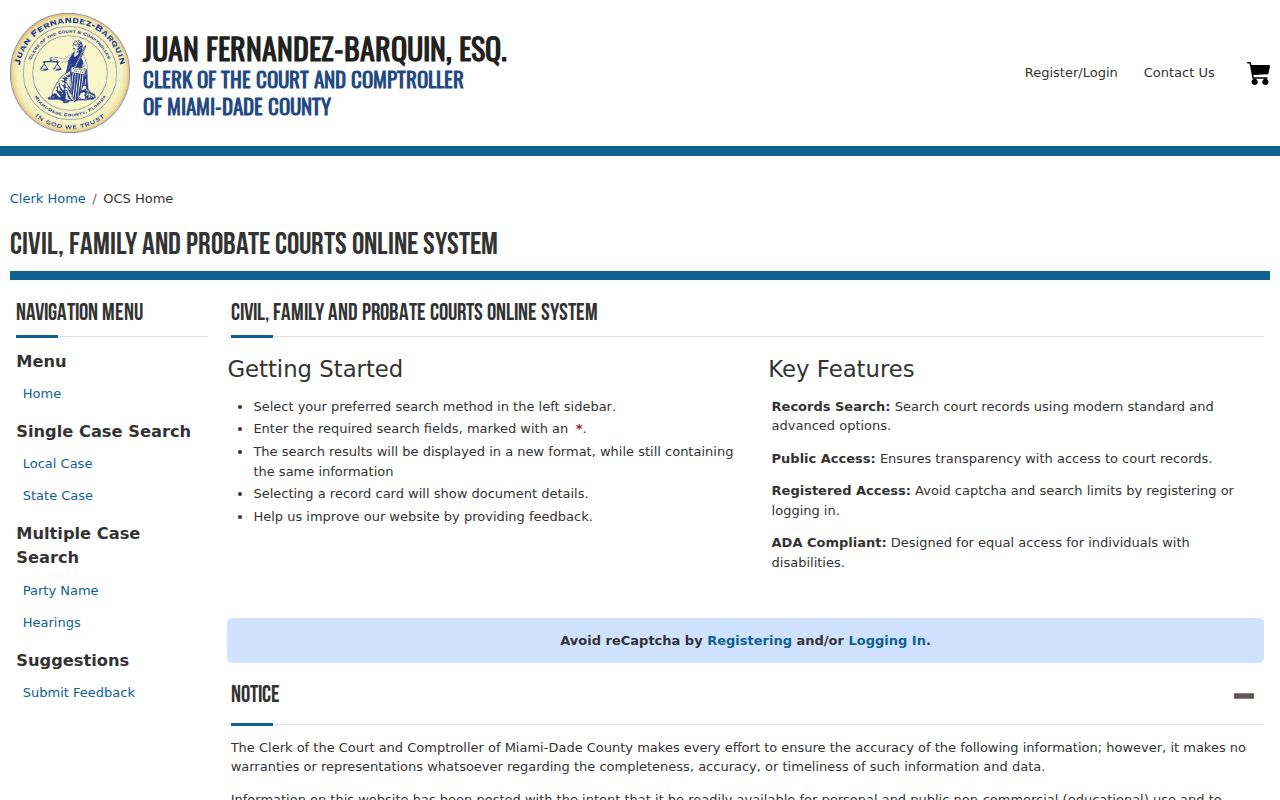
The Civil, Family and Probate Courts Online System accepts party name, local case number, state case number, or hearing date. Results can show the case number, style, parties, type, docket events, and allowed images. Adoption, juvenile, sealed, expunged, and other confidential material stays closed or partly hidden.
The official screen below is the right starting point for civil and probate name research.
Keep the case number and party role. They are safer identity anchors than a name alone.
Criminal records use the separate Miami-Dade criminal case search. Search modes include case number, citation or police number, defendant name, jail number, judge, and date.
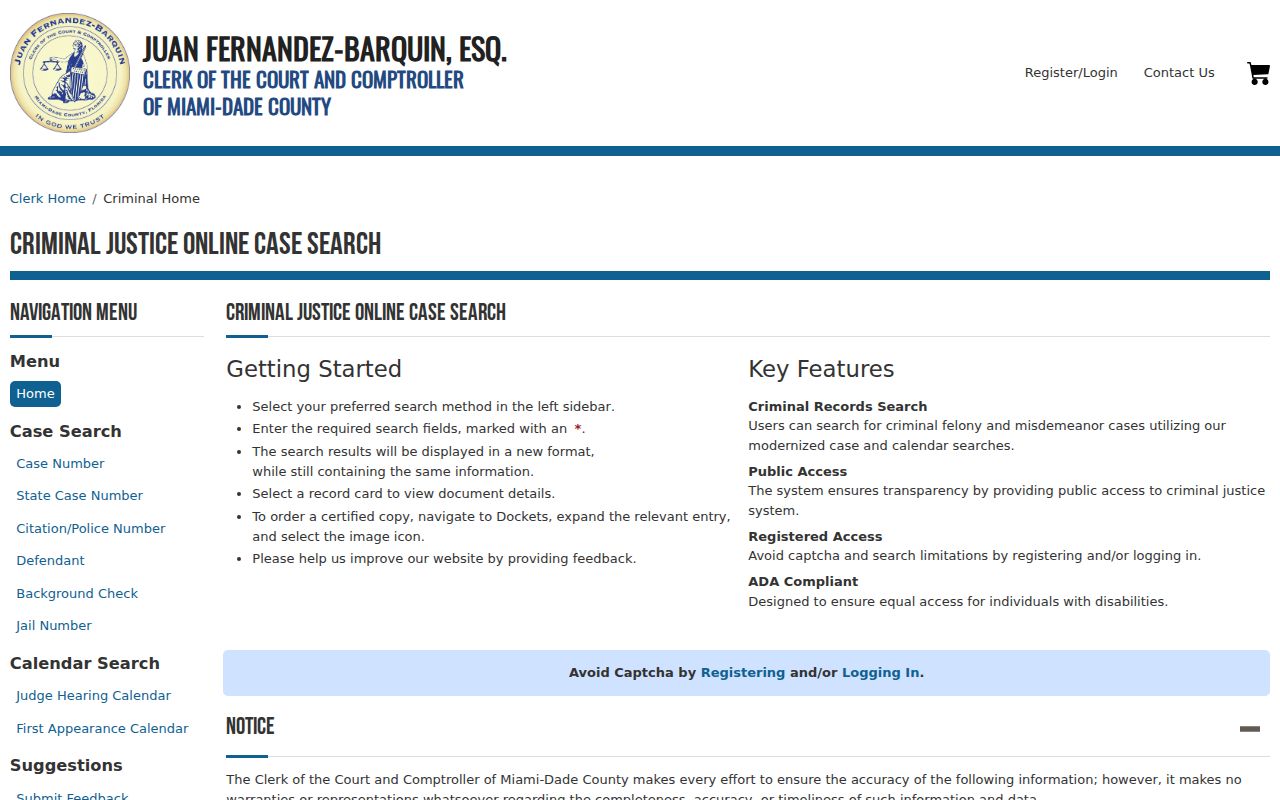
A result may show charges and docket events. The Clerk's official file controls if online data conflict.
Confirm Homestead Namesakes
Miami-Dade has many same-name hits. A careful resident lookup does not merge them. Try middle initials, prior surnames, hyphenated forms, and trust or company names where property is titled to an entity. Preserve each source's date and role. A plaintiff, personal representative, owner, registered agent, and licensee are not interchangeable.
- Start with the source closest to the question, such as a parcel, probate case, or license.
- Record two non-sensitive details, such as an initial and folio, or a case number and role.
- Compare a second independent index and make sure its date fits.
- Ask the custodian for an official image or certified copy when proof is needed.
- Docket
- The dated list of filings and events in a court case.
- Index versus image
- An index summarizes a filing; an image is the filed document when public.
- Certified copy
- A copy authenticated by the records custodian.
Note: A deed date, annual report, court filing, and license renewal describe separate moments, not one current snapshot.
Homestead Voter Data Routes
Florida's voter-status screen is an identity-gated self-check, not a public resident directory. It requires first name, last name, and date of birth. A match can show status, precinct, and election information, never ballot choices. A nonmatch can stem from spelling, a move, cancellation, protected data, or a wrong birth date.
Broader data follows a separate path. The Miami-Dade election-data request page accepts scoped requests with protected fields removed.
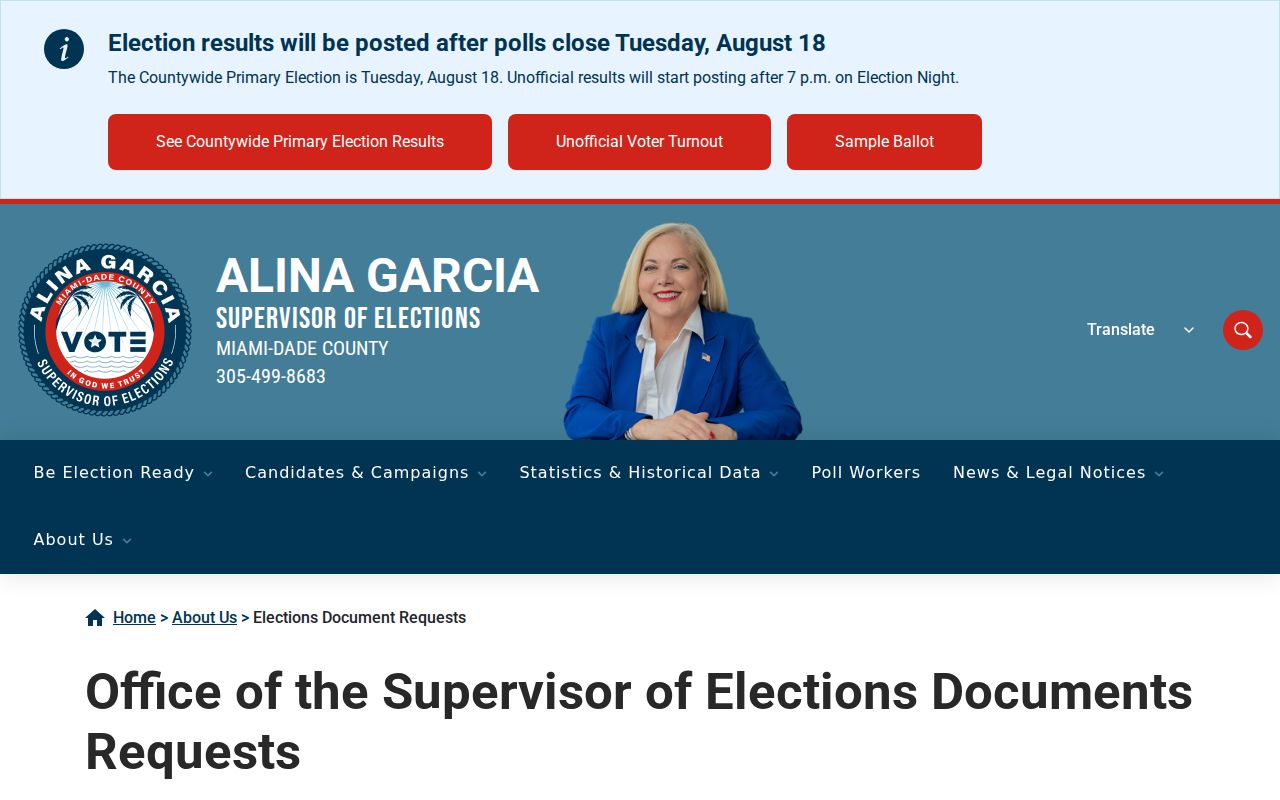
State the geography, desired fields, snapshot date, format, and delivery method. An inactive registration is only a dated lead.
Homestead Vital Record Rules
Florida births under 125 years old are confidential under section 382.025, Florida Statutes. Death certificates without cause are broadly available, while cause-of-death details remain restricted for 50 years. Marriage and dissolution certifications after June 6, 1927 come from the Bureau of Vital Statistics. The Clerk holds the underlying county license or court file and earlier marriage material.
The official Florida vital-record forms hub links separate applications.
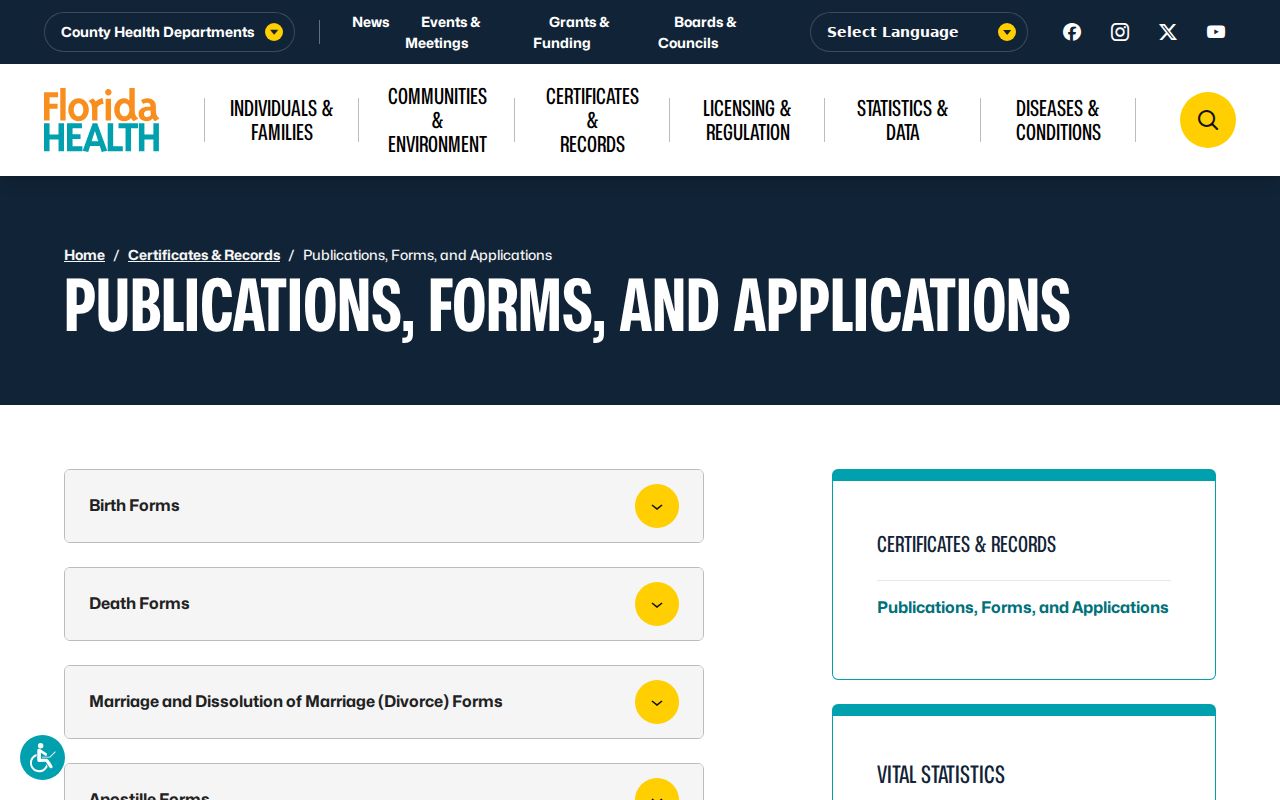
Use the form for the exact event. A certificate is not a full court file, and eligibility can differ even when an index fact is public.
Myth check. No single Homestead search is a complete residents roll. Every custodian records one legal relationship at one time.
Homestead Heir Research
Probate is the strongest official route for an estate or heir matter. Search the decedent in the civil and probate portal, save the case number, and identify the personal representative or public petition. Recorded deeds can connect real property to the estate. An obituary may add family context, but an address in an old petition may be a service address and must be dated.
Florida adoption files are confidential. The Florida Adoption Reunion Registry gives qualifying adoptees and birth relatives a consent-based route to register for contact. It respects sealed records and should be used as designed.
Florida Licenses and Status
Sunbiz can confirm a filed corporation role, registered agent, addresses, officers, annual reports, and document images. Those facts are business assertions, not proof of residence. DBPR and Department of Health MQA searches verify licenses and board records where published.
The MQA provider search is one official credential source.
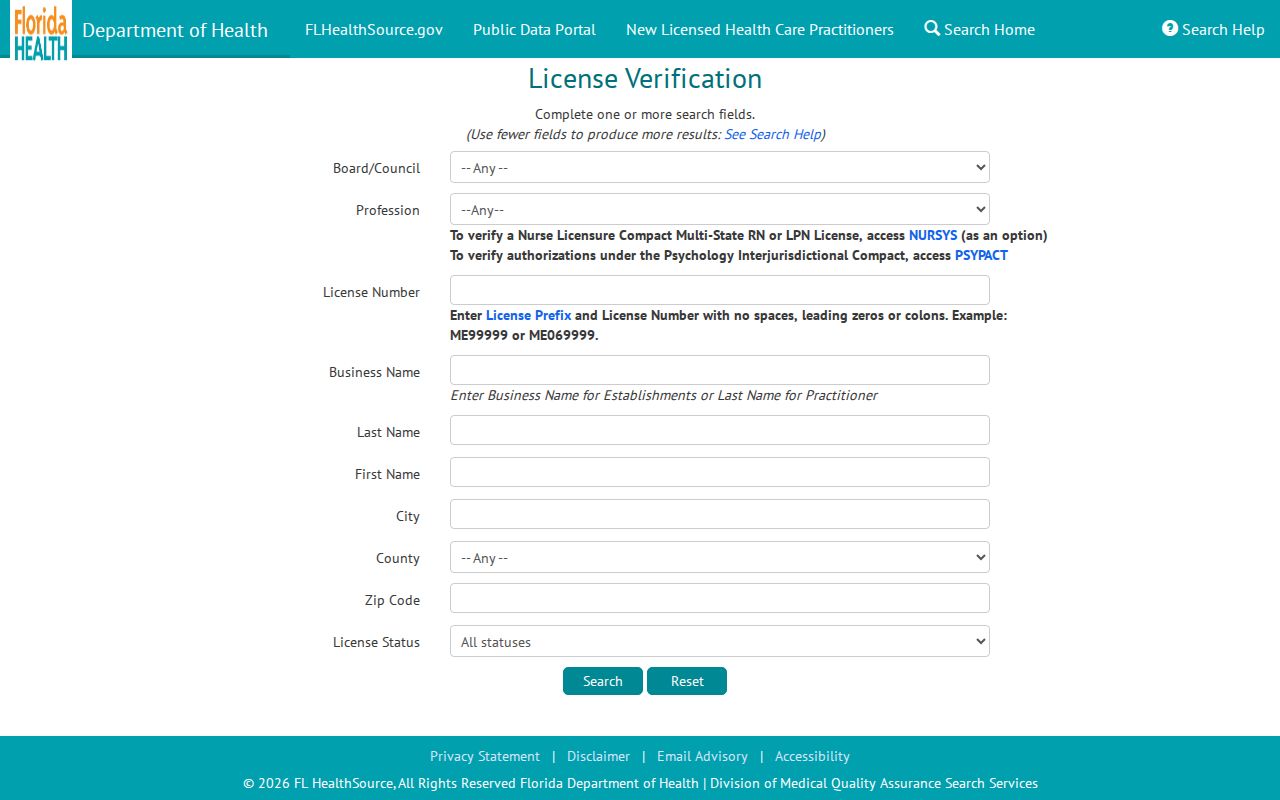
Match a license number and renewal date. A practice address may differ from a home.
The Florida corrections search is a separate status tool.
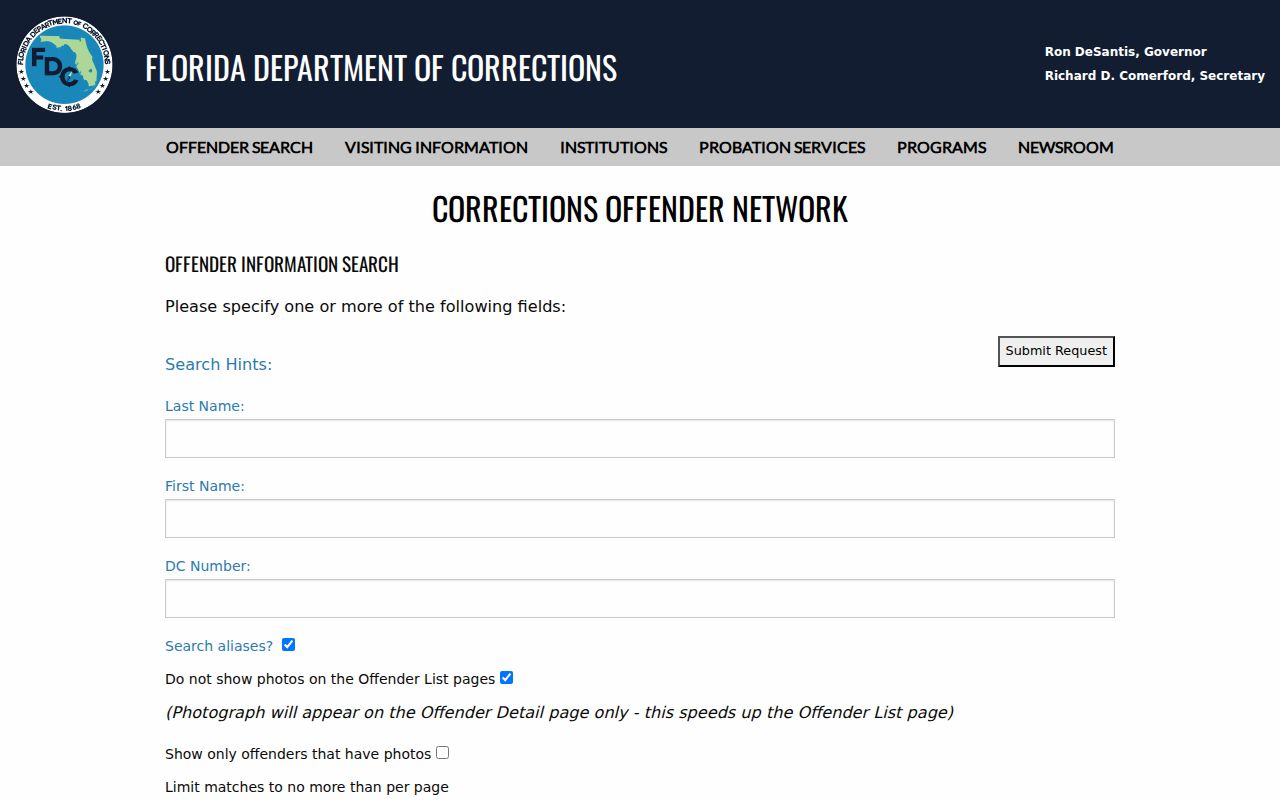
It describes custody, release, or supervision where public. It is not a general Homestead roll.
Homestead Records Request Fallbacks
Not every public record is posted. The City Clerk accepts municipal requests through its portal, by phone at 305-224-4434, by email at cityrecords@homesteadfl.gov, or in person at 100 Civic Court. A narrow request should name the department, record type, subject or address, and date range. Florida law does not require a requester to explain a lawful reason. It also does not require the city to answer broad research questions or create a new resident list.
The County Clerk's Records Library keeps pre-web indexes and documents, provides public computers, and accepts mail or counter requests. When an online court image is unavailable, save the case number and docket date before contacting Records Management. For an older deed, provide the full party name, rough year, instrument type, and legal description or book and page when known. Staff searches cost $2 per name per year. Copies are $1 per page, plus $2 for certification. Public terminals may show allowed material not posted to anonymous users.
Lawful Homestead Resident Lookup
Florida protects motor-vehicle data, recent births, confidential court files, and locations of protected voters and Address Confidentiality Program participants. An absent result may reflect those limits, or the spelling, county, date, or system may be wrong. Chapter 119 opens existing nonexempt records. It does not force an agency to create a biography or custom list.
When a fact is wrong, contact its custodian. The Property Appraiser handles roll corrections, the Clerk controls court and recorded files, and health officials handle vital amendments. Commercial compilations can be stale or merge namesakes. The dated source record is the sound check.
Lawful use. Use Homestead resident records for respectful personal, family, estate, consumer-safety, or civic research. Never stalk, threaten, harass, or evade confidentiality controls.
Homestead Property Name Clues
The Miami-Dade Property Appraiser offers four entry points: address, owner name, folio, and subdivision. An owner-name match returns a parcel card with the indexed owner, situs address, tax-bill mailing address, folio, legal description, characteristics, exemptions, and displayed sales. Situs means the physical parcel address. The mailing address is where the tax notice goes. A different mailing address can be a lawful clue to an absentee owner, but neither field identifies every person who occupies the property.
For a one-person Homestead resident lookup, copy the 13-digit folio and exact owner spelling before opening Official Records. Search the owner as a grantee near the displayed sale date, then compare the deed's legal description with the parcel card. Trusts, companies, initials, and spouses can change the indexed name. A deed may give a return address, but that describes document handling at the filing date and is not a current home without another source.
Property data changes as the assessment roll is updated. A recent sale may reach Official Records before every parcel field catches up. An old mailing address can also remain until corrected. Keep the year and source beside each saved fact, and use the Property Appraiser correction channel when its roll is wrong.
Homestead Public Record Roles
Role labels prevent false matches. A grantor transferred an interest; a grantee received one. A probate personal representative manages an estate but is not automatically an heir or resident. A registered agent accepts formal notices and may have no personal tie to a business address. A court lawyer is not a party. An inactive voter entry is a registration status, not proof of a present home.
Dates matter too. Compare the deed execution and recording dates, court filing date, annual-report year, license renewal, and assessment year. When two records point to the same name but the roles or dates conflict, keep them separate until a case number, folio, license number, or other stable identifier connects them.