
Homestead Previous Residents by Era
A search for previous residents works best when the source matches the date. The current Miami-Dade parcel card starts the trail with an assessed owner, folio, legal description, and any displayed sales. Recorded deeds then identify transfers and the parties to them. Yet ownership is not the same as occupancy. Federal census schedules, surviving directories, permits, newspapers, and probate files help show who lived here before, when a structure changed, and why a name left the address.
| Source | Years It Covers | Where Held | What It Shows |
|---|---|---|---|
| Property Appraiser parcel card | Current roll; prior years vary | Miami-Dade Property Search | Owner, folio, legal description, displayed sales |
| Recorder web index | Most records from 1974 onward | Official Records online | Grantors, grantees, deeds, liens, and plats |
| Older recorder books | Before 1974; varies by series | Records Library and microfilm | Earlier owners by name, book/page, and land description |
| Federal census | Public schedules through 1950 | NARA and genealogy collections | Named households at a census location |
| Homestead building file | First retained year not published | City Building Department | Permits, work scope, applicants, and completion clues |
For a recent transfer, begin with the parcel and deed indexes. For an older household, carry the legal description into the Records Library, then compare the result with a directory or census year. The surviving local directory points are useful, but not annual. A gap is a reason to change sources, not to fill in an occupant from guesswork.
Homestead Resident Records Cross 1974
Miami-Dade's ordinary online deed trail is strongest from 1974 forward. The County Recorder states that most records in that span are online, while earlier indexes and documents remain at the Records Library and are being added over time. That cutoff matters. A blank web result does not prove that an older transfer never happened.
The Records Library explains the pre-1974 fallback through public computers, staff help, mail, and in-person requests. Give a full party name and document type. Add the property address, subdivision, lot and block, or book/page whenever known. Staff searching costs $2 per name per year. Copies are $1 per page.
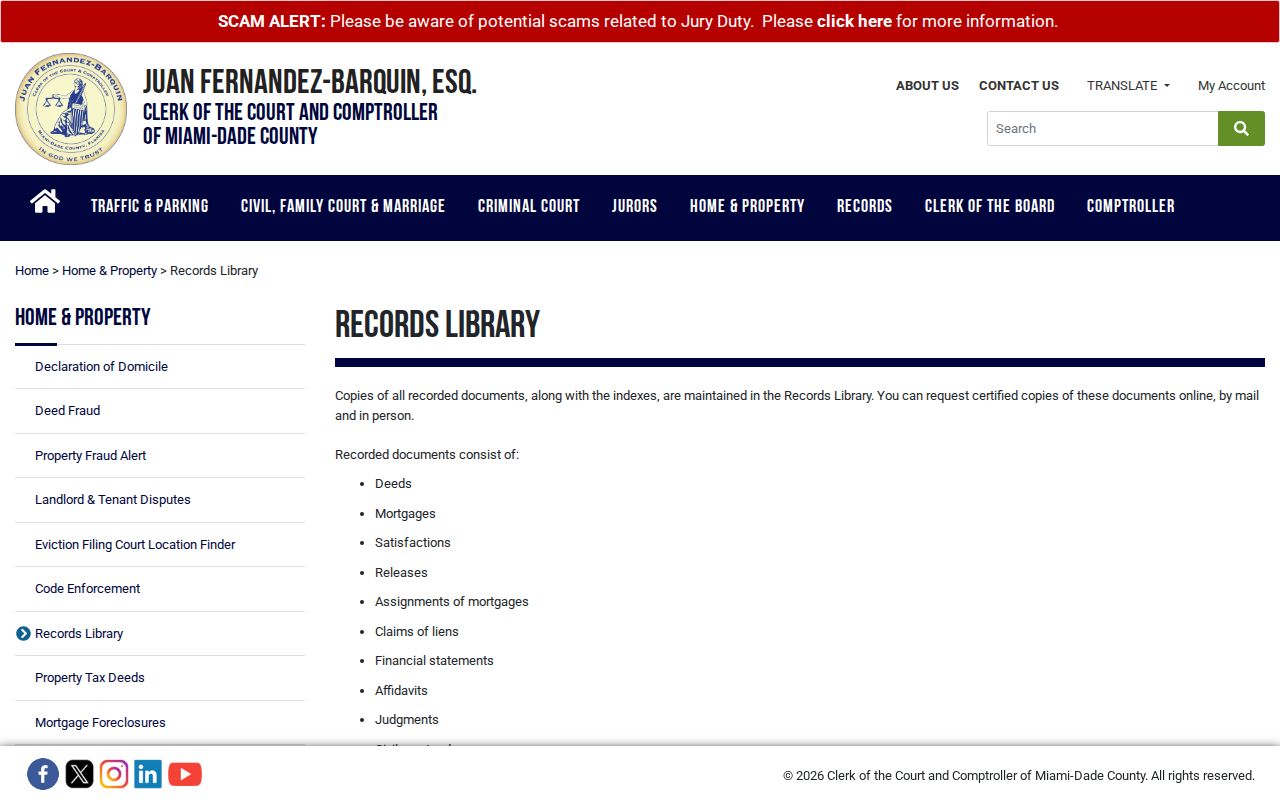
The captured page marks the point where a web-only search should become a library request. It keeps older Homestead previous residents within reach without overstating online coverage.
Trace Homestead Past Resident Records
The deed chain supplies the ownership spine for previous residents of a Homestead address. Start with the current owner exactly as indexed by the Property Appraiser. Save the 13-digit folio and the full legal description. Those land keys are more stable than street text, especially where the historic quadrant grid, county numbered roads, aliases, or annexations complicate an address.
- Search the exact address in Property Search. Record the indexed owner, folio, subdivision, lot and block, legal description, and latest displayed sale.
- Search the current owner as grantee, the buyer, in Official Records. Narrow near the sale date and confirm the land description.
- Open that deed and record the grantor, recording and execution dates, CFN, book/page, and any prior-instrument reference.
- Search that grantor as grantee on an earlier deed. Repeat while confirming every hop by folio, legal description, CFN, or book/page.
- When the chain reaches the web cutoff, take the party names and land keys to the Records Library rather than searching only the modern address.
- Grantor / grantee
- The grantor transfers an interest. The grantee receives it.
- Chain of title
- The linked sequence of transfers for the same parcel.
- Legal description
- The lot, block, subdivision, or other land description that identifies property despite a changed street label.
A recording date proves when the Clerk accepted a document. It is not a move-in date. Mortgages, satisfactions, probate orders, judgments, and lis pendens can explain a gap or a transfer that was not a normal sale. Search spouses, initials, surname variants, trusts, and entity names before concluding that a link is missing.
Certify Homestead Resident Records
An index entry is a finding aid. A certified copy is the Clerk's authenticated copy of the recorded instrument. For mail service, include book/page when known, the year, party names, instrument type, a self-addressed stamped envelope, and payment. The researched schedule is $1 per page plus $2 for certification.
The Clerk's certified-copy instructions show how to move from a name in an index to record evidence suitable for an estate or family-history file.
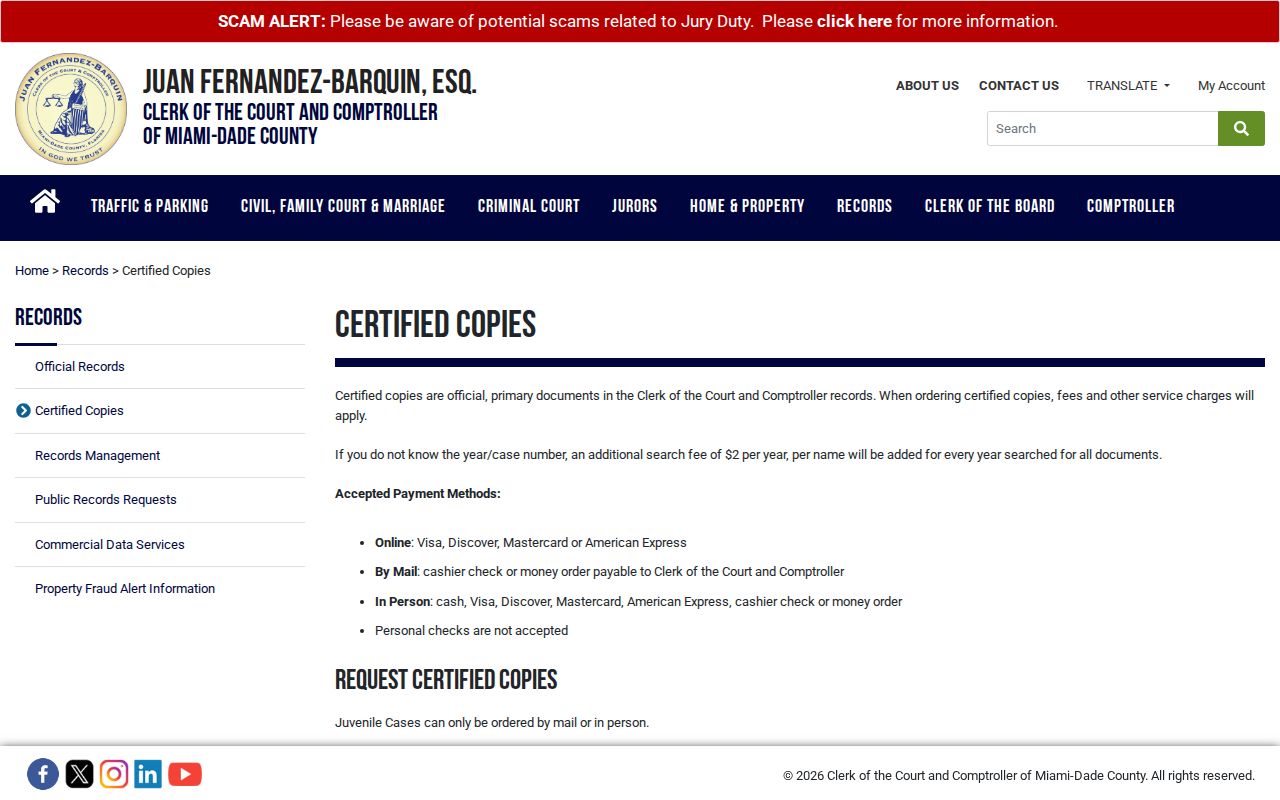
The image reinforces a key split: online results locate an instrument, while the Clerk supplies the official copy. Keep both the search notes and the requested document together.
Bridge Homestead Past Resident Addresses
Homestead's local NE, NW, SE, and SW grid meets Miami-Dade names such as SW 288th Street and SW 312th Street in the larger postal area. Krome Avenue, Mowry Drive, Campbell Drive, Flagler Avenue, and Lucy Street also appear as key reference names. Annexation expanded the city east and northeast from the older core. Street wording alone can therefore send a backward search to the wrong parcel.
Use the folio, plat, and legal description as the bridge. A Homestead municipal parcel normally starts with folio prefix 10; prefix 30 indicates unincorporated Miami-Dade. No authoritative, complete renaming chronology was found. For a suspected alias, request the relevant ordinance or resolution from the City Clerk.
Insider tip. A folio and legal description usually survive inconsistent street text better than a guessed old address.
Homestead Records Date the Structure
City building files can add open permits, permit history, plans, surveys, inspection records, and a certificate of occupancy. A permit may name an owner, applicant, or contractor and date an addition or repair. None of those roles proves who occupied the home. Use the file to build a structure timeline alongside the deed chain.
Prior-year aerial images in Property Search or e-Maps can also show when a building footprint or land use changed. The exact image-year list varies in the application. Pair visible change with a permit or recorded notice of commencement instead of assigning an exact construction date from an aerial alone.
Three Sanborn Fire Insurance Map checkpoints add earlier context. National Register documentation cites Homestead maps for 1914, 1920, and 1927. They can show a building footprint, use, and street layout near the same years covered by phone lists and the first Polk directory. A map label still needs support from a deed, directory entry, or census schedule before it is tied to named previous residents.
Three Homestead Directory Checkpoints
Surviving Polk material supplies concrete checks in 1927, 1938, and 1955 rather than one complete annual run. Historic South Dade and the Town Hall Museum also preserve telephone and other local sources. A directory name and address can place a person in a year, but abbreviations and party-line exchange conventions need care.
The State Library of Florida describes its city-directory access and catalog guidance for filling gaps beyond local scans.
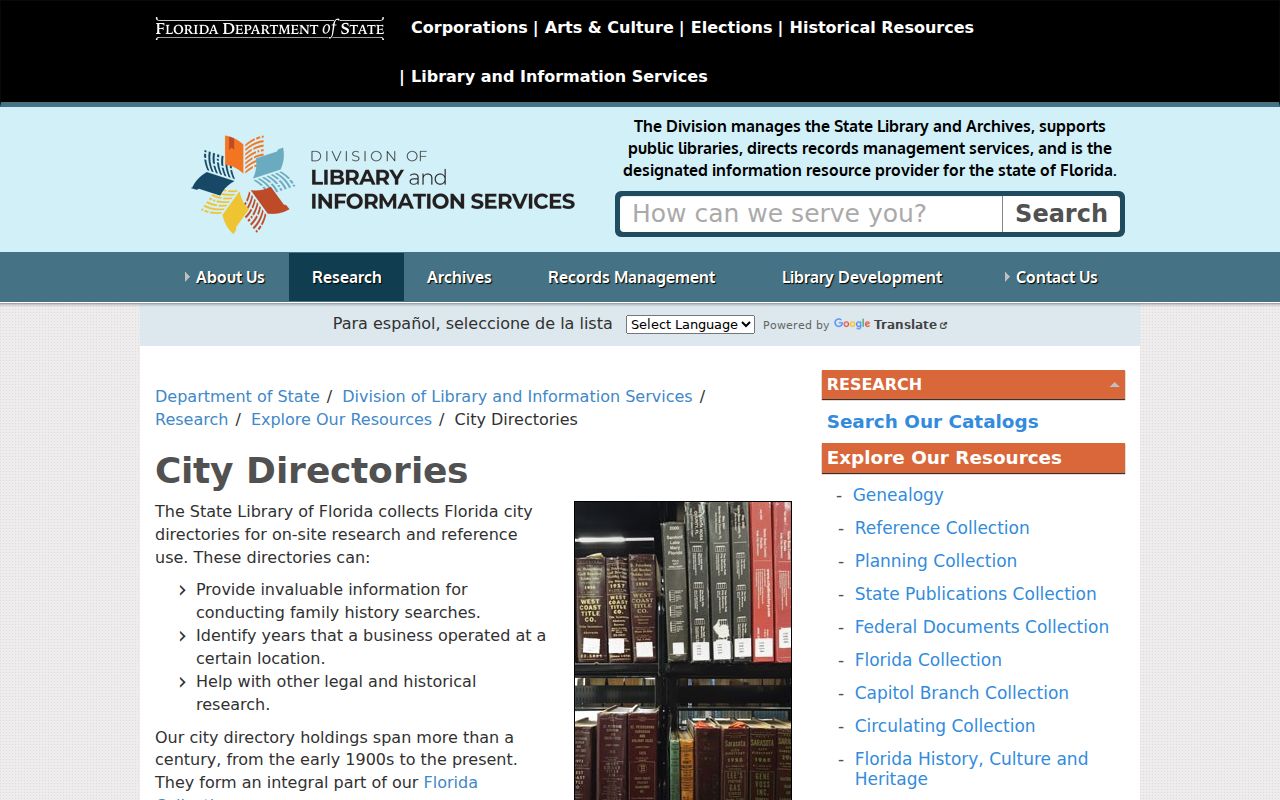
The state page is a second shelf, not proof of a specific volume. Confirm the catalog year before tying past residents to the address. The surviving Homestead collections themselves are detailed in the Homestead city directories.
Connect Homestead Past Households
Owners are only part of the story. A directory entry may identify an occupant who never held title. Public federal census schedules through 1950 can name a full household, but the address must be matched with care through street order and enumeration geography. An enumeration district is the area assigned to a census taker. A criss-cross directory reverses the usual name index by arranging entries by address or telephone number.
- Choose a verified directory year and transcribe the name, full address, spouse notation, and abbreviations exactly.
- Find the closest public census year. Confirm the street and nearby households, not just a matching surname.
- Compare the household with the deed owner. A mismatch may reflect family, a renter, or a stale record, so state only what each source shows.
- Follow deaths or departures through probate, cemetery indexes, obituaries, and the next known directory checkpoint.
Historic Homestead's Naranja Cemetery index, obituary index, and plot maps can connect a South Dade name to a grave and published notice. Probate files may identify heirs or explain a title transfer. Newspaper notices can separate people with the same name.
The local record trail changes form across time. Council minutes begin with incorporation in 1913, and Historic South Dade links a digitized run through 1965. Those minutes may name petitioners, appointees, license holders, and people involved in street or property matters. They are not a household roll, but they can bridge a person between directory years when the subject and date fit the same parcel story.
Save the source itself, not just the conclusion. Record the volume year, page, image number, newspaper date, census district, and spelling exactly as shown. That citation lets another researcher test whether the same household and address were matched.
The Historic Homestead newspaper project includes the South Florida Banner, Homestead Enterprise, and the later Homestead Leader-Enterprise line.
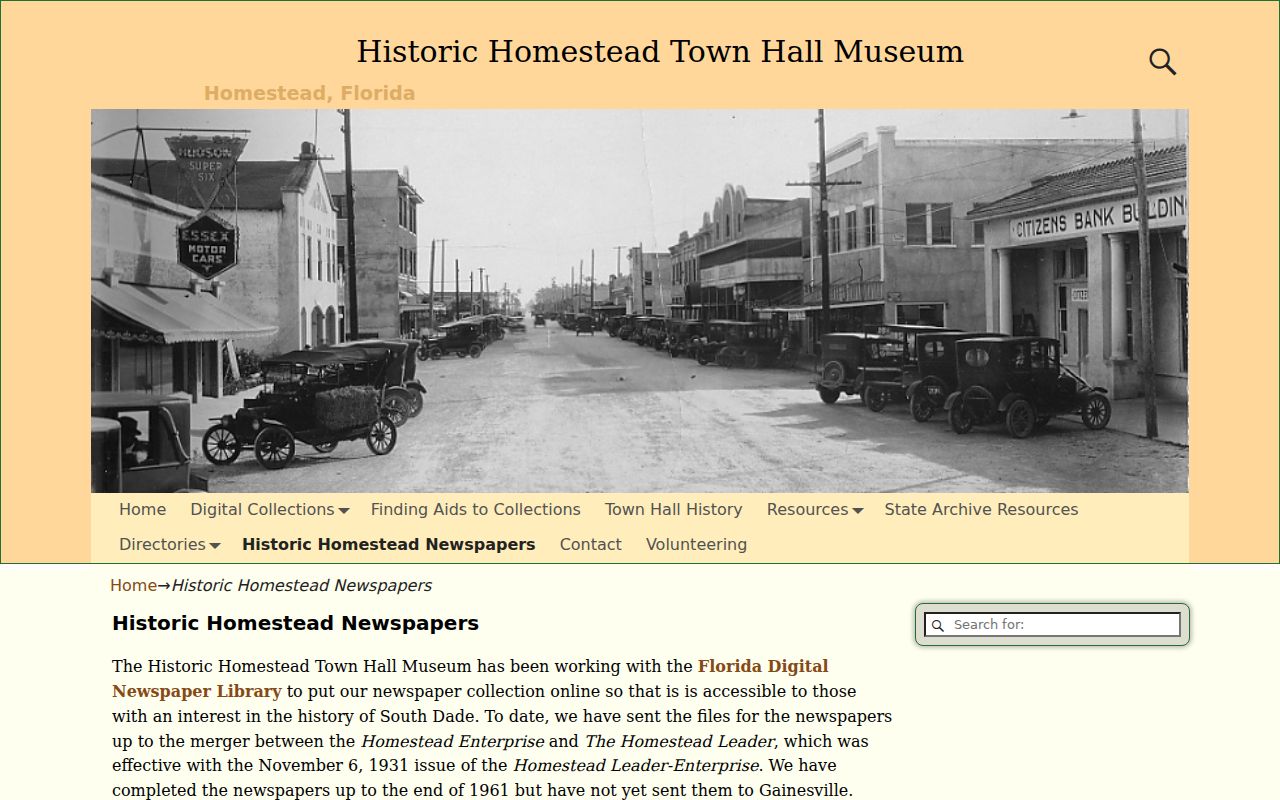
The captured collection adds obituaries, society notes, ads, and legal notices to the address trail. It can explain a move or family link that a deed does not show.
Lawful use. Research Homestead previous residents for house history, genealogy, and estate work, never to track, expose, or harass a living person.